Pura Goa Lawah: The “Bat Cave Temple” of Bali
Pura Goa Lawah is one of Bali’s primary temples (Kahyangan Jagat) and a popular tourist destination in East Bali. Sacred to Balinese Hindus, the temple represents the harmonious union of the sea and the mountains. It serves as a place of deep gratitude to Almighty God in the manifestations of Lord Girinatha, the protector of the mountains, and Lord Baruna, the ruler of the sea. Visitors traveling to the eastern part of the island can easily include Pura Goa Lawah on their itinerary or combine it with a trip to nearby attractions such as Candidasa, Prasi Beach (Virgin Beach), Taman Ujung Water Palace, Labuan Amuk, and Tulamben.
Location and Historical Background
Pura Goa Lawah is located approximately 49 kilometers from Denpasar in Dawan Sub-district, Klungkung Regency, or about 10 kilometers east of Semarapura City. The temple’s rich history is documented in ancient palm-leaf manuscripts (lontar), including the Usana Bali and Babad Pasek.
According to these historical texts, Pura Goa Lawah was established in the 11th century AD under the initiative of the revered priest Mpu Kuturan, and was later expanded and restored in the 15th century AD. The Usana Bali notes that Mpu Kuturan composed the sacred work Dharma Babading Wawu Anyeneng, which guided the establishment of several major temples across Bali, including Pura Goa Lawah. Today, this unique sanctuary remains one of the island’s most important Kahyangan Jagat temples, famous for the thousands of bats inhabiting its central cave.
Unique Architecture and Temple Complex
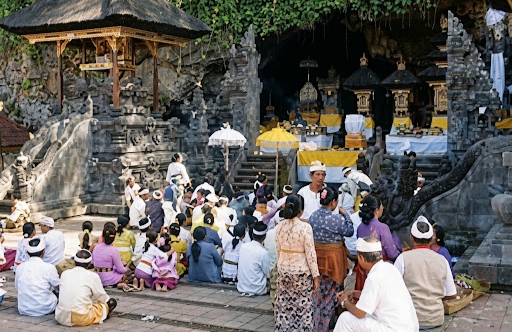
Pura Goa Lawah attracts both foreign and domestic travelers with its unique setting where the coastal shore meets green hills. At the heart of the complex is a natural cave filled with thousands of bats, shielded by large ancient trees growing above it. At the entrance of the cave stand several intricate shrines and altars.
The outer courtyard features impressive statues and sacred shrines (stana). Near the cave mouth, key structures include the main shrine dedicated to worshiping Sang Hyang Tunggal (God Almighty), a three-tiered Meru tower (Meru Tumpang Telu), Gedong Limasari, and Gedong Limascatu.
Visitor Facilities and Religious Ceremonies
The temple area offers spacious parking options to accommodate both tourists and large groups of pilgrims. Parking is available across the coastal road as well as in a newly designated lot to the east of the temple complex.
These parking facilities are essential during major Hindu religious ceremonies—such as the Nyegara Gunung ritual, Melasti purification processions, and holy water (tirta) rituals—when thousands of devotees gather to offer prayers.
Local Culinary Delights and Nearby Kusamba Beach
Visitors can enjoy a variety of local food and drink stalls surrounding the temple. For an authentic local dining experience, traditional lesehan (floor-seating) eateries serve delicious Balinese tuna dishes made from fresh catches supplied by fishermen at nearby Kusamba Beach.
Kusamba Beach, located just adjacent to Pura Goa Lawah, is also widely known for its traditional, high-quality sea salt production, making it a wonderful cultural stop alongside the temple visit.


Leave a Reply