
The History of Bali: From Prehistory to the Modern Era
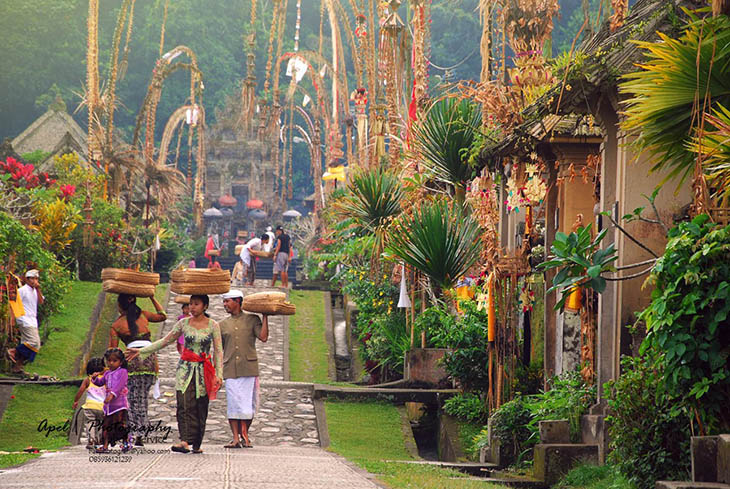
Bali possesses a long and fascinating historical narrative spanning from the prehistoric ice-age era to today’s modern, globalized civilization. Characterized by adaptability and cultural flexibility, Balinese culture originated as an expressive tradition rooted in religion, community solidarity, and aesthetics. Today, it continues to evolve by harmoniously integrating modern economic, scientific, and technological developments while preserving its core spiritual identity.
Generally, the history of Bali is divided into three major periods: the Prehistoric Era, the Hindu-Buddhist Era, and the Modern Era.
The Prehistoric Era
The prehistoric period represents the earliest chapter of human life in Bali, defined by hunting, food gathering, and the gradual development of early stone tools. Archeological discoveries in Cekik Village, located in West Bali, confirm that the island was inhabited as early as 3000 to 2500 BC. Over time, early inhabitants established basic construction systems and social communication networks.
The prehistoric era in Bali gradually drew to a close around 100 BC with the arrival of Indian traders and the introduction of Hinduism, Sanskrit writing, and early metallic tools.
The Hindu-Buddhist Era and Royal Kingdoms
Following the 1st century AD, Balinese culture was deeply influenced by Indian traditions through a process of peaceful cultural enculturation. Early written records, such as the famous Belanjong Pillar (Prasasti Blanjong) issued by King Sri Kesari Warmadewa in 913 AD, officially recorded the island’s name as Walidwipa (Bali Island). During this era, the famous Subak traditional agricultural irrigation system was developed alongside complex Hindu religious rituals. In 1343 AD, the Java-based Majapahit Empire conquered Bali and established a subordinate kingdom. When Majapahit collapsed in the late 15th century following the rise of Islamic sultanates across Java, thousands of Majapahit nobles, Hindu priests, artisans, and scholars fled to Bali. This major exodus enriched Balinese culture, cementing the unique form of Balinese Hinduism practiced today.
Colonial Contact and Dutch Conquest
European contact began in 1585 when a Portuguese ship ran aground near the Bukit Peninsula in Jimbaran. However, the first European expedition to formally land on Bali was led by Dutch explorer Cornelis de Houtman in 1597. Dutch colonial interest intensified in the 19th century through the Dutch East India Company (VOC) and later the Dutch colonial government.
Beginning around 1840 from northern Bali, the Dutch employed divide et impera (divide and conquer) tactics to stir conflict among local Balinese kingdoms. By 1846, full military campaigns commenced, and by 1911, all Balinese principalities were under complete Dutch control.
During the Dutch invasions of Sanur and Denpasar in 1906, Balinese royals and citizens chose a heroic fighting death over surrender. Known as Puputan (a ritual fight to the death), thousands of men, women, and royal family members marched against heavily armed Dutch troops. Over 4,000 Balinese perished in this heroic sacrifice.
World War II and the Struggle for Independence
During World War II, Imperial Japan occupied Bali from 1942 to 1945, expelling the Dutch. Following Japan’s surrender in August 1945, Indonesia proclaimed its independence under Sukarno and Hatta. However, Dutch forces returned to re-establish colonial control.
In response, Lieutenant Colonel I Gusti Ngurah Rai organized a local resistance force named Ciung Wanara. On November 20, 1946, fighting culminated in the historic Battle of Puputan Margarana in Marga Village, Tabanan. Refusing to surrender, Ngurah Rai and his entire battalion fought until their deaths, creating a legendary symbol of Balinese patriotism.
In 1946, the Dutch established the State of East Indonesia (Negara Indonesia Timur) with Bali as one of its regions. The Netherlands officially recognized Indonesian sovereignty on December 29, 1949, following the Dutch-Indonesian Round Table Conference. By 1950, Bali formally dissolved its ties with the Dutch-sponsored federation and became an official province of the Republic of Indonesia.
The Modern Era and Contemporary Bali
In 1963, a catastrophic eruption of Mount Agung devastated the island’s agricultural economy, prompting a wave of Balinese transmigration to other islands across Indonesia. Soon after, during the political unrest of 1965 following the failed G30S/PKI movement, Bali experienced severe social upheaval.
Despite these historical challenges, Bali rebuilt itself rapidly. Today, Bali has transformed into a world-renowned global tourist destination. It stands as a testament to cultural resilience, seamlessly blending ancient Hindu traditions, artistic heritage, and modern global tourism.



Leave a Reply