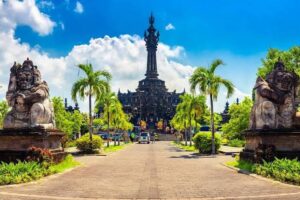
Taman Ayun Temple: The Charm of Ancient Architecture and the Splendor of the Mengwi Royal Garden
Introduction
Built in 1634, Taman Ayun Temple is the only temple complex in Bali that fully showcases the traditional Balinese building architecture with its signature tiered roofs, known as Meru. The name Taman Ayun translates to “beautiful garden.” Located in Mengwi Village, approximately 18 km west of Denpasar, this sacred site is widely recognized as one of Bali’s most picturesque and photogenic temples.
As the main temple of the ancient Mengwi Kingdom, Taman Ayun Temple houses shrines (pelinggih) dedicated to the worship of royal ancestors, as well as a Meru-structured shrine complex for worshipping the principal deities in Hinduism.
Architecture and Spiritual Philosophy
The Taman Ayun Temple complex is surrounded by lush lotus gardens and expansive moats. Conceptually, the landscape of the temple is designed to mirror Mount Mahameru floating upon a sea of milk (Ksirarnava in Hindu mythology).
Its stately proportioned courtyards and large surrounding moat were commissioned in 1634 by the first King of Mengwi, I Gusti Agung Anom (I Gusti Agung Putu). Seen from a distance, Taman Ayun Temple appears as a peaceful island floating on water. Its majestic pagodas, elegant pathways, and expansive grounds reflect the splendor of a bygone era and the colorful royal pageantry intrinsic to Balinese culture.
Temple Complex Structure
The Taman Ayun Temple complex is divided into four distinct, ascending courtyards, symbolizing levels of spiritual sanctity:
Jaba (Outer Courtyard):
Located just across the moat, this outer area is accessible via a single bridge. Here lies a small protective shrine guarding the entrance, alongside a large open hall (Wantilan) used for cultural performances and ritual gatherings on ceremonial days.
Middle Courtyard:
Passing through the Candi Bentar (split gate), visitors enter the middle courtyard. On the eastern side sits a small shrine complex known as Pura Luhuring Purnama. Opposite it, on the western side, is a large open resting hall and a small pond featuring fountains on all sides.
Utama Mandala (Sacred Inner Sanctuary):
The highest and most sacred area, where rows of multi-tiered Meru towers stand majestically representing the abodes of the Gods and Bali’s sacred mountains.
Ceremonial Traditions (Piodalan)
Every 210 days, on Tuesday Kliwon Medangsia (according to the traditional Balinese Pawukon/Caka calendar), the local community gathers at the temple to celebrate its anniversary (Piodalan), paying homage to the Supreme God and royal ancestors.

Leave a Reply